University of Tokyo Campus Guide for International Students
Introduction
Making the decision to study in Japan is a buzzing one and it is important to know what it is like to attend the University of Tokyo Campus as one of the international learners. The University of Tokyo (also referred to as Todai) has a long history and well-acclaimed academic quality, and it provides an exciting campus atmosphere that is rich in traditional culture, innovation, and cultural diversity. This guide examines the University of Tokyo campus life, student life, campus environment, and traditions, clubs, accommodation and lifestyle in Tokyo.
How Is the Campus of the University of Tokyo?
The University of Tokyo Campus is distributed in various places, with the main campuses being in Hongo, Komaba and Kashiwa.
Hongo Campus
The original core of the university lies in its Hongo Campus. It features:
- Yasuda red-brick Auditorium: the icon.
- Developed research laboratories.
- Academic centers, libraries.
- And the greenbrooked streets are so lovely.
Komaba Campus
Komaba as a derivative First-year undergraduate level Proffers:
- Modern classrooms
- Student activity centers and student clubs.
- Sports facilities
- International exchange schemes.
Kashiwa Campus
It emphasizes research in the fields of science and technology making it one of the campuses that have all the latest technology available including the partnership with international research centers like the university of tokyo atacama observatory where astronomical studies are done.
The University of Tokyo Campuses are all a blend of traditional Japanese architectures and modern academic settings.
Famous Alumni of University of Tokyo
UN Tokyo has been producing powerful world leaders, scientists, and business innovators. Famous alumni are Nobel winners, Japanese prime ministers and entrepreneurial and engineering innovators.
The extensive alumni network of the university is a major factor in mentoring the students and contributing to the development of their career.
Traditions, Culture & Campus Events
Culture and Academics The combination of academics and culture is one of the most fascinating things about The University of Tokyo Campus.
Japanese Bon Dance Festival
Cultural events such as the japanese bon dance festival belong to campus life, and students have a chance to get acquainted with the traditional Japanese culture.
May Festival (Gogatsusai)
May festival of the university is one of the biggest student-organized festivals in Japan. Students organize:
- Cultural performances
- Research exhibitions
- Food stalls
- Live music events
The traditions render the University of Tokyo Campus both academically and culturally stimulating.
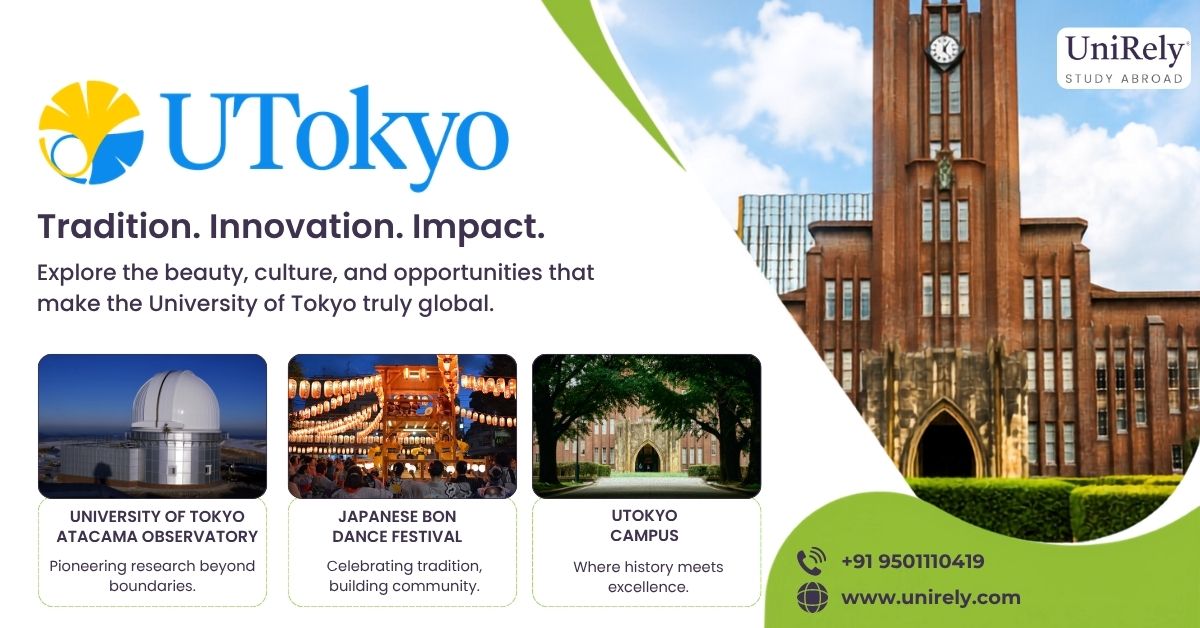
University of Tokyo campus showcasing student life, cultural traditions, and iconic experiences including festivals and academic excellence.
University of Tokyo Students Life on Campus
Life in the University of Tokyo is intellectually and socially stimulating among students.
A typical day may include:
- Going to lectures and seminars.
- Engaging in laboratory research.
- Joining study groups
- Attending club meetings
- Exploring campus events
Its academics are based on research excellence and independent thinking. Meanwhile, students are taken on board in extracurricular activities.
The University of Tokyo Campus promotes cooperation between national and foreign students, which leads to cross-cultural studies.
University of Tokyo Student Clubs and Societies
The university has hundreds of student organizations in terms of academic, cultural and recreational.
Academic & Professional Clubs
Students also form subject-based societies that boost academic and career growth.
Cultural Clubs
Cultural associations can also enable foreign students to exchange their culture as they acquire Japanese culture.
Sports & Recreational Clubs
Fitness clubs and sports teams advise a healthy lifestyle. Students can choose among martial arts, football and so on.
Being an active member of clubs improves networking and leadership capabilities besides adding fulfillment to life in the University of Tokyo Campus.
Accommodation and Cost of Living
On-Campus Housing
International and domestic students are offered dormitories in the University of Tokyo. These residences offer:
- Furnished rooms
- Food halls and group areas.
- Affordable rental costs
- Easy accessibility to university amenities.
Residing in university dorms enables students to blend fast into the University of Tokyo Campus fraternity.
Off-Campus Accommodation
Students can also hire private apartments in Tokyo. The rental rates are dependent on the location and size of the room.
Estimated Living Costs in Tokyo
Living costs (as is common with undergraduate and postgraduate students):
- Accommodation: JPY 600,000 – 1,200,000 annually
- Food: JPY 400,000 – 600,000
- Transportation: JPY 150,000 – 250,000
- Personal expenses: JPY 200,000 – 400,000
Annual Cost In Japanese Yen In Indian Rupees Accommodation ¥600,000 – ¥1,200,000 ₹3,54,000 – ₹7,08,000 Food & utilities ¥400,000 – ¥600,000 ₹2,36,000 – ₹3,54,000 Transportation & personal expenses ¥200,000 – ¥400,000 ₹1,18,000 – ₹2,36,000
In total, the estimated cost of living in Japan ought to be ¥1,300,000 – ¥2,300,000 per annum.
The conversion from Japanese Yen to INR has been made with ¥1 = ₹0.59. The cost may vary with changes in the exchange rate.
Life in Tokyo: City Overview
Tokyo is a highly dynamic and technologically developed city in the world. The students residing around the University of Tokyo Campus enjoy:
- Sound and secure people transport.
- Connection of world corporate headquarters.
- Rich cultural heritage
- Diverse food culture
- Job and internship opportunity.
Tokyo is a mixture of ancient temples and festivals and hi-tech buildings and centres of innovation. This combination of custom and technology adds to the whole student experience.
UniRely: Your Partner for University of Tokyo Admissions
To apply to a prestigious institution such as the University of Tokyo, one has to plan and prepare properly to apply.
UniRely, the most popular educational guidance site provides:
- Individual university admissions counseling.
- Reviewing application documents.
- Scholarship guidance
- Interview preparation
- Pre-departure and visa services.
UniRely makes sure that students do not only get admission, but they also prepare well to live in the University of Tokyo Campus.
Conclusion
The Campus of University of Tokyo provides an outstanding academic and cultural experience to the international students. Campus life is rich and lively, not only in terms of the historic buildings and research eminence but also in the form of lively festivals and stud clubs, among others. Life in Tokyo gives an exposure to world innovations and trapped the students in the Japanese culture. Students will be able to start their studies in one of the finest universities in Asia, with the help of UniRely Study Abroad Consultant, and have no doubts about it. Taking your University of Tokyo degree will mean starting off with a legacy of excellence – and it will mean creating your own future through knowledge, culture and international opportunity.
Frequently Asked Question
What is campus life like at the University of Tokyo?
Campus life is academically intense but well-balanced, with modern facilities, active student communities, and strong research culture.
Is the University of Tokyo campus friendly for international students?
Yes, the university offers international support services, English programs, and student communities, making it easier to adjust.
What are the main student traditions at the University of Tokyo?
Popular traditions include May Festival (Gogatsusai) and Komaba Festival, where students showcase culture, food, and performances.
Are there student clubs and societies at the University of Tokyo?
Yes, there are hundreds of clubs (called “circles”) covering sports, music, anime, cultural activities, and academics.
What facilities are available on the University of Tokyo campus?
The campus offers libraries, research labs, cafeterias, sports centers, and student lounges.
What makes the University of Tokyo campus unique?
Its combination of historic architecture, advanced research environment, and deep cultural exposure makes it unique globally.